Blood tests for athletes
Train on your own numbers
Amateur or professional. A blood test does not stop an injury on its own. It shows risk factors you can change, such as low iron stores or low vitamin D, so you can act on them with your GP.
Find your check-up: Gym and sport
Why athletes check their blood
What the research supports, with the source of each point at the bottom of the page.
- 01
Low iron is common in athletes, even without anaemia
Studies find iron deficiency in around 15 to 35% of female athletes and 5 to 11% of male athletes. It can be there before haemoglobin falls, so the number to look at is ferritin, your iron stores. Swiss sports medicine guidance reads ferritin under 30 µg/L as low stores in athletes over 15, and suggests checking about twice a year.[1, 2, 3]
- 02
Knowing your iron changes what you do about it
In a meta-analysis of endurance athletes with low iron but normal haemoglobin, treatment improved iron stores and VO2max. A later review found better performance in only half of the studies, so the picture is mixed: measure first, and decide on treatment with your GP, not on a hunch.[4, 5]
- 03
UK winters run vitamin D down
From October to early March, your skin does not make enough vitamin D from UK sunlight. In a UK study, 62% of professional athletes not taking supplements were under 50 nmol/L in winter. In a large trial in female navy recruits, giving everyone calcium plus vitamin D lowered stress fractures by about a fifth.[6, 7, 8, 9]
- 04
Not eating enough for your training shows in the blood
The IOC consensus on Relative Energy Deficiency in Sport (REDs) lists blood markers among its signs: low T3 and, in men, low testosterone are main signs, raised cholesterol is a secondary sign, and falling iron is listed as an emerging one. No single test confirms REDs, but the pattern helps you and your GP or sports medicine team decide the next step.[10, 11]
- 05
Your own baseline beats a population range
Creatine kinase (CK) and urea rise with hard training. Early research in athletes suggests CK is more useful compared with your own rested values than with a general reference range, and urea may be too. One test is a snapshot; repeated tests show your trend.[12, 13, 14]
- 06
Being fit does not switch off heart risk
European sports cardiology guidelines estimate heart risk in adults over 35 who play sport using cholesterol, age, sex, blood pressure and smoking. A UK study of male endurance athletes over 40 with normal cholesterol found more coronary plaque than in less active men, mostly calcified; what that means for risk is still uncertain.[15, 16]
What a blood test can and cannot do
It can
- Show risk factors you can change, such as low iron stores, low vitamin D or low B12
- Give you a baseline to compare against through the season
- Help you and your GP decide what to look at next
It cannot
- Stop an injury on its own: training load, sleep, food and technique matter too
- Tell you whether you are overtrained from a single number
- Replace an assessment by your GP or sports medicine team
Find yourself here
The markers that usually make sense for each kind of training. Your GP can tell you what fits your own case.



Women who train
Female athletes have the highest rates of iron deficiency, with menstrual losses on top of training. In the IOC consensus, missed periods are one of the main signs of low energy availability, and irregular periods also count. Both are always worth raising with your GP. Ferritin is the first number to know.[1, 10, 18]
What each marker shows
UK units, as they appear on your result.
Ferritin (µg/L)
Your iron stores. Under 30 µg/L reads as low stores in athletes over 15. Inflammation and a hard session can push it up, so it is read with CRP.[3, 18]
When to repeat: About twice a year; before an altitude block
Full blood count
Haemoglobin and red cells. Training expands plasma, so haemoglobin can read slightly low in trained athletes without true anaemia.[3, 19]
When to repeat: With ferritin
Vitamin D, 25(OH)D (nmol/L)
Your vitamin D status. UK guidance sets 25 nmol/L as the level to stay above all year to protect musculoskeletal health. A review of trials in athletes found no clear gain in performance from supplements.[9, 20]
When to repeat: Late autumn or winter; after supplements, as your GP advises
Vitamin B12 and folate
B12 and folate status. Vegan and vegetarian diets, or cutting out food groups, raise the risk of low B12.[21]
When to repeat: If your diet changes, or as your GP advises
Creatine kinase, CK (U/L)
Muscle stress after training. It varies with age, sex, muscle mass and the last session, so it only means something against your own baseline.[13, 17]
When to repeat: In a series, same time of day and same point in your training week
Urea (mmol/L)
Load and recovery, clearest in endurance sport. Protein intake and hydration also move it, so it is read against your baseline.[12, 13]
When to repeat: In a series, like CK
Testosterone (men)
Low testosterone in male athletes is one of the IOC's signs of low energy availability. It changes through the day, so keep the same time of day for each test.[11]
When to repeat: If there are signs of under-fuelling, as your GP advises
Thyroid: TSH, free T4, free T3
Thyroid function. A low T3 is one of the IOC's main signs of low energy availability.[11]
When to repeat: With a general check-up, or with signs of under-fuelling
Cholesterol: total, LDL, HDL
Cardiovascular risk, which matters most for masters athletes. Raised total or LDL cholesterol is also one of the IOC's secondary signs of low energy availability.[11, 15]
When to repeat: From age 35, as often as your GP advises
HbA1c
Your average blood sugar over the past two to three months. Part of a general health check, most relevant for masters athletes and a family history of diabetes.
When to repeat: From age 35 or with a risk factor, as often as your GP advises
When to test
- Start of the seasonA baseline before pre-season or a new training block, to compare everything else against.
- In a heavy blockMid-season or in the build-up to a race, to see how you are carrying the load.
- Late autumn or winterWhen UK sunlight is not enough for your skin to make enough vitamin D.
- After an injury or illnessBefore you build back up, so your return starts from known numbers.
- When your diet changesGoing vegan or vegetarian, cutting weight, or cutting out food groups.
- Tired for no clear reasonPerformance dropping, or tiredness that rest does not fix: talk to your GP, and a blood test is a common first step.
So your results compare
- Test after a rest day or an easy day, not the morning after a race
- Keep the same time of day and the same point in your training week
- Compare each result with your own previous ones
Based on recommendations for using blood markers in athletes.[14]
What to do with your result
Your result arrives in your account, with reference ranges. A value outside the range, or a symptom with a normal result, is a conversation with your GP: treatment and supplements are their call.
Where the clinic comes in
With your numbers in hand, your therapist at BPR can help you plan training load and recovery, in person or through the app.
See how we workTests that cover these markers
Not sure which one? The guided check-up suggests a starting point in a few questions.
Find your check-up: Gym and sport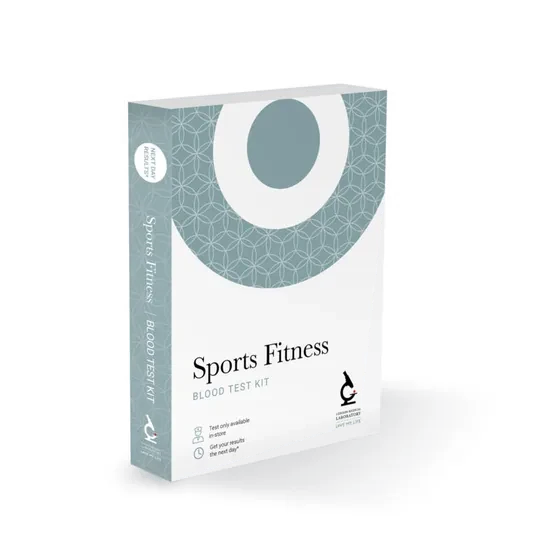
Sports Fitness Profile
The core panel for people who train: full blood count, iron and ferritin, CK and urea, liver and kidneys, cholesterol, CRP, vitamins D and B12, and testosterone.
Collection pointResult in about 1 working daySee the test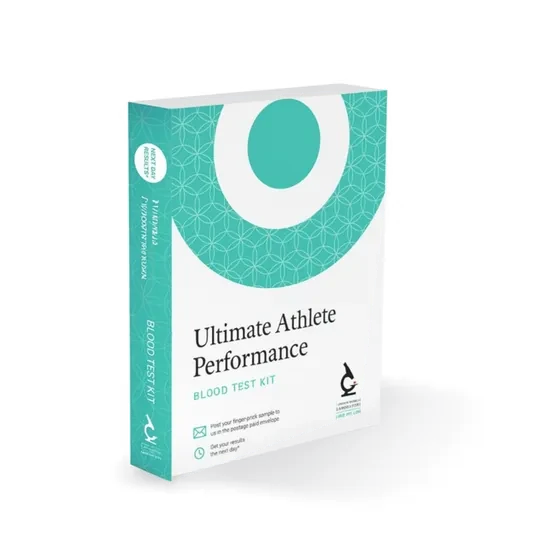
Ultimate Athlete Performance
The widest panel: everything in the core panel plus HbA1c, the full thyroid (TSH, free T4, free T3), folate, cortisol and sex hormones.
Collection pointResult in about 1 working daySee the test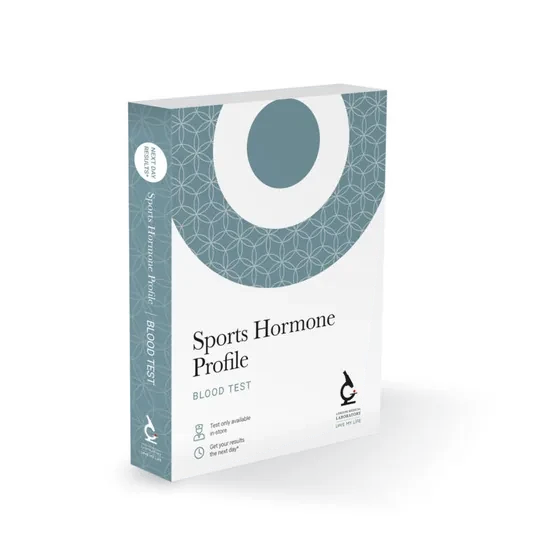
Sports Hormone Profile
The hormones that affect training, or are affected by it, in men and women, with thyroid and liver.
Collection pointResult in about 1 working daySee the test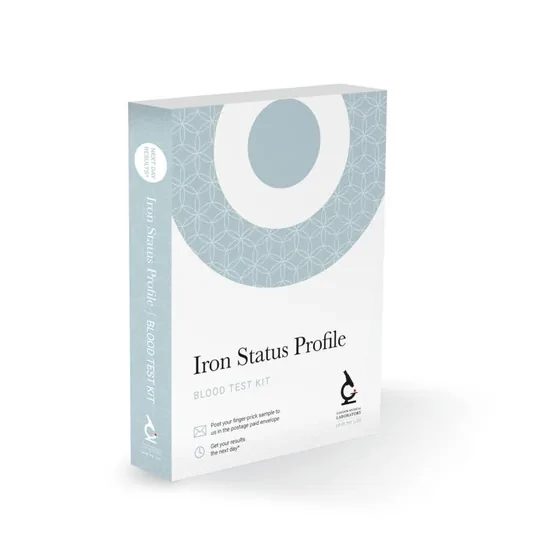
Iron and iron stores
Ferritin, iron, transferrin saturation and iron-binding capacity: the iron picture on its own.
Collection pointHome kitResult in about 1 working daySee the test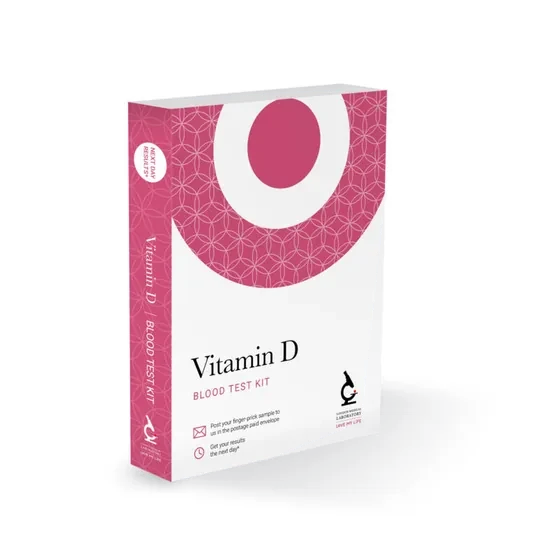
Vitamin D
Your 25(OH)D level, the one to check in late autumn or winter.
Collection pointHome kitResult in about 1 working daySee the test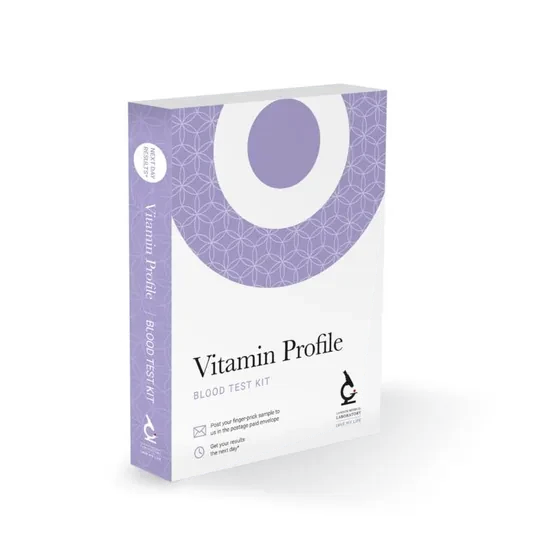
Vitamins D, B12 and folate
Vitamin D with B12 and folate, useful if you eat a vegan or vegetarian diet.
Collection pointHome kitResult in about 1 working daySee the test
Prices are in the app, once you have an account.
Take the guide with you
Eight pages with the arguments, the marker table, a checklist of when to test and every reference. Free to download, no email needed.
References
- 1.Sim M, Garvican-Lewis LA, Cox GR, et al. Iron considerations for the athlete: a narrative review. Eur J Appl Physiol. 2019;119:1463-1478. doi:10.1007/s00421-019-04157-y PMID 31055680.
- 2.Coates A, Mountjoy M, Burr J. Incidence of Iron Deficiency and Iron Deficient Anemia in Elite Runners and Triathletes. Clin J Sport Med. 2017;27:493-498. doi:10.1097/JSM.0000000000000390 PMID 27606953.
- 3.Clénin G, Cordes M, Huber A, et al. Iron deficiency in sports - definition, influence on performance and therapy. Swiss Med Wkly. 2015;145:w14196. doi:10.4414/smw.2015.14196 PMID 26512429.
- 4.Burden RJ, Morton K, Richards T, Whyte GP, Pedlar CR. Is iron treatment beneficial in, iron-deficient but non-anaemic (IDNA) endurance athletes? A systematic review and meta-analysis. Br J Sports Med. 2015;49:1389-1397. doi:10.1136/bjsports-2014-093624 PMID 25361786.
- 5.Rubeor A, Goojha C, Manning J, White J. Does Iron Supplementation Improve Performance in Iron-Deficient Nonanemic Athletes?. Sports Health. 2018;10:400-405. doi:10.1177/1941738118777488 PMID 29792778.
- 6.NHS. Vitamin D. nhs.uk. 2026. www.nhs.uk/conditions/vitamins-and-minerals/vitamin-d/
- 7.Close GL, Russell J, Cobley JN, et al. Assessment of vitamin D concentration in non-supplemented professional athletes and healthy adults during the winter months in the UK: implications for skeletal muscle function. J Sports Sci. 2013;31:344-353. doi:10.1080/02640414.2012.733822 PMID 23083379.
- 8.Lappe J, Cullen D, Haynatzki G, et al. Calcium and vitamin d supplementation decreases incidence of stress fractures in female navy recruits. J Bone Miner Res. 2008;23:741-749. doi:10.1359/jbmr.080102 PMID 18433305.
- 9.Scientific Advisory Committee on Nutrition. Vitamin D and Health. Public Health England. 2016. www.gov.uk/government/publications/sacn-vitamin-d-and-health-report
- 10.Mountjoy M, Ackerman KE, Bailey DM, et al. 2023 International Olympic Committee's (IOC) consensus statement on Relative Energy Deficiency in Sport (REDs). Br J Sports Med. 2023;57:1073-1097. doi:10.1136/bjsports-2023-106994 PMID 37752011.
- 11.Stellingwerff T, Mountjoy M, McCluskey WT, et al. Review of the scientific rationale, development and validation of the International Olympic Committee Relative Energy Deficiency in Sport Clinical Assessment Tool: V.2 (IOC REDs CAT2). Br J Sports Med. 2023;57:1109-1118. doi:10.1136/bjsports-2023-106914 PMID 37752002.
- 12.Hecksteden A, Skorski S, Schwindling S, et al. Blood-Borne Markers of Fatigue in Competitive Athletes - Results from Simulated Training Camps. PLoS One. 2016;11:e0148810. doi:10.1371/journal.pone.0148810 PMID 26891051.
- 13.Hecksteden A, Pitsch W, Julian R, et al. A New Method to Individualize Monitoring of Muscle Recovery in Athletes. Int J Sports Physiol Perform. 2017;12:1137-1142. doi:10.1123/ijspp.2016-0120 PMID 27967274.
- 14.Haller N, Behringer M, Reichel T, et al. Blood-Based Biomarkers for Managing Workload in Athletes: Considerations and Recommendations for Evidence-Based Use of Established Biomarkers. Sports Med. 2023;53:1315-1333. doi:10.1007/s40279-023-01836-x PMID 37204619.
- 15.Pelliccia A, Sharma S, Gati S, et al. 2020 ESC Guidelines on sports cardiology and exercise in patients with cardiovascular disease. Eur Heart J. 2021;42:17-96. doi:10.1093/eurheartj/ehaa605 PMID 32860412.
- 16.Merghani A, Maestrini V, Rosmini S, et al. Prevalence of Subclinical Coronary Artery Disease in Masters Endurance Athletes With a Low Atherosclerotic Risk Profile. Circulation. 2017;136:126-137. doi:10.1161/CIRCULATIONAHA.116.026964 PMID 28465287.
- 17.Brancaccio P, Maffulli N, Limongelli FM. Creatine kinase monitoring in sport medicine. Br Med Bull. 2007;81-82:209-230. doi:10.1093/bmb/ldm014 PMID 17569697.
- 18.Pedlar CR, Brugnara C, Bruinvels G, Burden R. Iron balance and iron supplementation for the female athlete: A practical approach. Eur J Sport Sci. 2018;18:295-305. doi:10.1080/17461391.2017.1416178 PMID 29280410.
- 19.Mairbäurl H. Red blood cells in sports: effects of exercise and training on oxygen supply by red blood cells. Front Physiol. 2013;4:332. doi:10.3389/fphys.2013.00332 PMID 24273518.
- 20.Farrokhyar F, Sivakumar G, Savage K, et al. Effects of Vitamin D Supplementation on Serum 25-Hydroxyvitamin D Concentrations and Physical Performance in Athletes: A Systematic Review and Meta-analysis of Randomized Controlled Trials. Sports Med. 2017;47:2323-2339. doi:10.1007/s40279-017-0749-4 PMID 28577257.
- 21.Rogerson D. Vegan diets: practical advice for athletes and exercisers. J Int Soc Sports Nutr. 2017;14:36. doi:10.1186/s12970-017-0192-9 PMID 28924423.
- 22.Kasapis C, Thompson PD. The effects of physical activity on serum C-reactive protein and inflammatory markers: a systematic review. J Am Coll Cardiol. 2005;45:1563-1569. doi:10.1016/j.jacc.2004.12.077 PMID 15893167.
General information, not personal medical advice. Talk to your GP about your own situation. Questions: write to [email protected] or message us in the app.