Blood tests for strength training and the gym
Heavy lifting changes some results for days, and a lot of muscle changes how others are read. Knowing this, your numbers tell you something real.
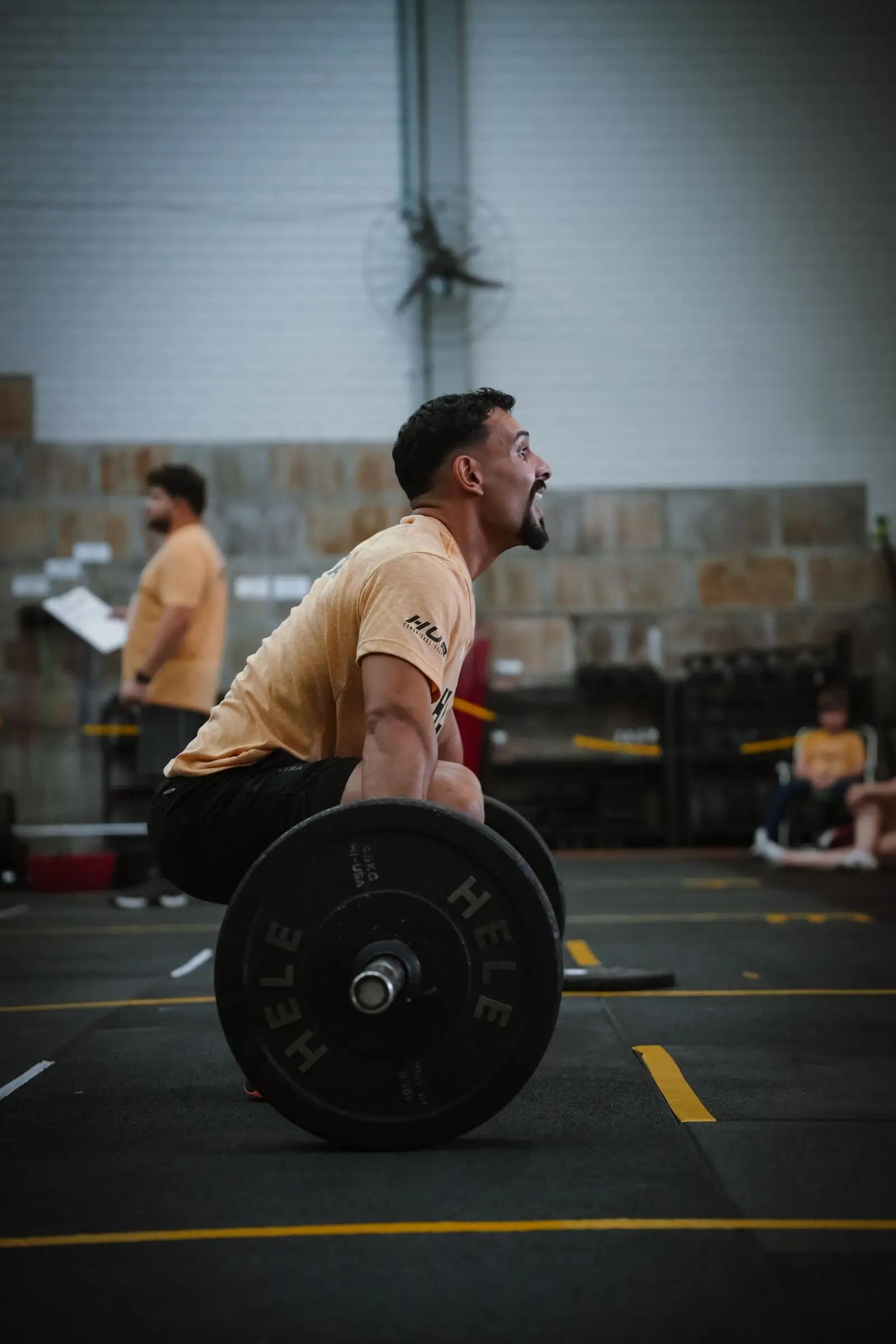
Watch: the why in a minute
Strength and gym
1 minute 7 seconds
Why it makes sense at this stage
What the research supports, with the source of each point at the bottom of the page.
- 01
Heavy lifting changes liver and muscle tests for days
In healthy men, one hour of weightlifting raised AST, ALT and CK, and they stayed high for at least 7 days. Tested in the wrong week, a healthy body can give a worrying result.[1]
- 02
CK is the fatigue marker of strength training, against your own baseline
In simulated training camps, CK followed fatigue in strength training. It depends on age, sex, ethnicity and muscle mass, and rises in the 24 hours after hard effort, so your own range tells you more than a group range.[2, 3, 4]
- 03
A lot of muscle changes how your kidney result is read
UK guidance says to read eGFR with caution in people with a lot of muscle, such as bodybuilders, and to eat no meat in the 12 hours before the test.[5]
- 04
Being strong does not switch off heart risk
European sports cardiology guidance works out the risk of people over 35 who play sport from cholesterol, age, sex, blood pressure and smoking.[6]
The tests and why
What usually makes sense for this group. Your GP can tell you what fits your own case.
CK (creatine kinase)
The muscle enzyme. Heavy sessions raise it for days, so it only means something against your own rested baseline.[1, 2, 3, 4]
When to repeat: As a series, after 2 to 3 easy days, at the same point in your training week.
Liver tests (ALT, AST, GGT)
Weightlifting can raise ALT and AST for a week, so tell whoever reads your result how you trained.[1]
When to repeat: With your general panel; if high, again after a week without heavy training, as your GP advises.
Kidneys (creatinine, eGFR, urea)
A lot of muscle can make eGFR read lower than it really is, and meat in the 12 hours before the test can change it.[5]
When to repeat: With your general panel.
Cholesterol (total, LDL, HDL, triglycerides)
Heart risk. Being strong does not cancel it out. No fasting needed.[6, 7]
When to repeat: From 35, as often as your GP advises.
Full blood count, ferritin and vitamin D
A baseline for red cells, iron stores and vitamin D, the usual core for anyone who trains. Ferritin is still the first number for women who lift.[8, 9]
When to repeat: Ferritin about twice a year if you are at risk; vitamin D in late autumn or winter.
Testosterone (men)
A baseline for testosterone. It changes through the day, so keep the same morning time for each test. Low testosterone in men is one of the signs of not eating enough for your training.[10]
When to repeat: Only with a reason, such as a cutting phase or a health concern, as your GP advises.
If you use or have used anabolic steroids
About 6.4% of men and 1.6% of women have used them, and most users are gym-goers, not athletes. They affect the heart, liver, hormones and kidneys: tell your GP, and your results give you numbers for that conversation.[11, 12]
When to repeat: As your GP advises.
What a blood test can and cannot do
It can
- Give you a rested baseline for CK and liver tests
- Read your kidney result with your muscle mass in mind
- Show your cholesterol, which being strong does not cancel out
It cannot
- Monitor a steroid cycle: we do not offer that
- Show whether you are overtrained: testosterone and cortisol do not tell you that
- Read a high CK as an injury: it rises with normal training
Tests that cover these markers
Not sure which one? The guided check-up suggests a starting point in a few questions.
Find your check-up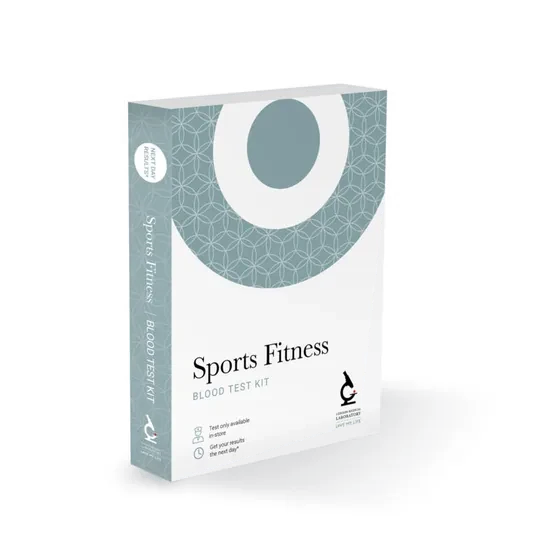
Sports Fitness Profile
The core panel: CK, liver, kidneys, full cholesterol, full blood count, iron and ferritin, CRP, vitamins D and B12, and testosterone. At a collection point.
Collection pointResult in about 1 working daySee the test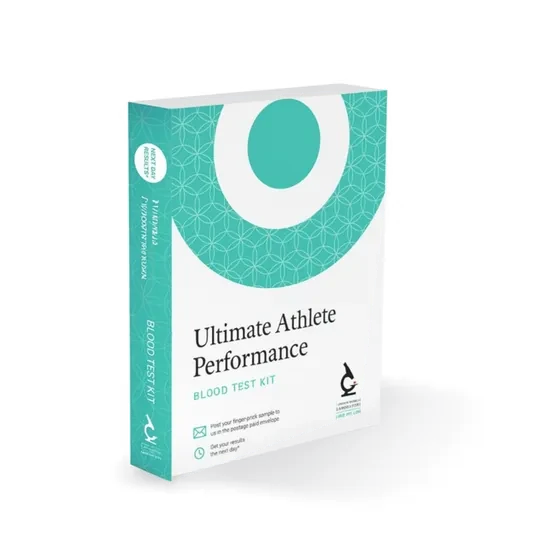
Ultimate Athlete Performance
Everything in the core panel plus HbA1c, the full thyroid, cortisol, sex hormones and SHBG. At a collection point.
Collection pointResult in about 1 working daySee the test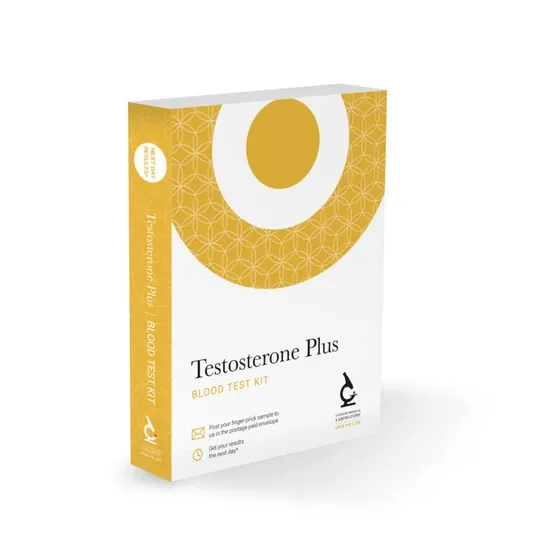
Testosterone Plus
For men: total testosterone, SHBG, calculated free testosterone and albumin, with a home kit. Take it in the morning, at the same time each test.
Home kitCollection pointResult in about 1 working daySee the test
Prices are in the app, once you have an account.
What to do with your result
Your result arrives in your account, with reference ranges. A value outside the range, or a symptom with a normal result, is a conversation with your GP: treatment and supplements are their call. Repeat the same test later to compare.
Take the guide with you
The reasons, the tests and every reference, in a few pages. Free to download, no email needed.
References
- 1.Pettersson J, Hindorf U, Persson P, et al. Muscular exercise can cause highly pathological liver function tests in healthy men. Br J Clin Pharmacol. 2008;65:253-259. doi:10.1111/j.1365-2125.2007.03001.x PMID 17764474.
- 2.Hecksteden A, Skorski S, Schwindling S, et al. Blood-Borne Markers of Fatigue in Competitive Athletes - Results from Simulated Training Camps. PLoS One. 2016;11:e0148810. doi:10.1371/journal.pone.0148810 PMID 26891051.
- 3.Brancaccio P, Maffulli N, Limongelli FM. Creatine kinase monitoring in sport medicine. Br Med Bull. 2007;81-82:209-230. doi:10.1093/bmb/ldm014 PMID 17569697.
- 4.Hecksteden A, Pitsch W, Julian R, et al. A New Method to Individualize Monitoring of Muscle Recovery in Athletes. Int J Sports Physiol Perform. 2017;12:1137-1142. doi:10.1123/ijspp.2016-0120 PMID 27967274.
- 5.NICE. Chronic kidney disease: assessment and management (NG203). nice.org.uk. 2021. www.nice.org.uk/guidance/ng203/chapter/Recommendations
- 6.Pelliccia A, Sharma S, Gati S, et al. 2020 ESC Guidelines on sports cardiology and exercise in patients with cardiovascular disease. Eur Heart J. 2021;42:17-96. doi:10.1093/eurheartj/ehaa605 PMID 32860412.
- 7.NICE. Cardiovascular disease: risk assessment and reduction, including lipid modification (NG238). nice.org.uk. 2023. www.nice.org.uk/guidance/ng238/chapter/Recommendations
- 8.Clénin G, Cordes M, Huber A, et al. Iron deficiency in sports - definition, influence on performance and therapy. Swiss Med Wkly. 2015;145:w14196. doi:10.4414/smw.2015.14196 PMID 26512429.
- 9.Scientific Advisory Committee on Nutrition. Vitamin D and Health. Public Health England. 2016. www.gov.uk/government/publications/sacn-vitamin-d-and-health-report
- 10.Stellingwerff T, Mountjoy M, McCluskey WT, et al. Review of the scientific rationale, development and validation of the International Olympic Committee Relative Energy Deficiency in Sport Clinical Assessment Tool: V.2 (IOC REDs CAT2). Br J Sports Med. 2023;57:1109-1118. doi:10.1136/bjsports-2023-106914 PMID 37752002.
- 11.Sagoe D, Molde H, Andreassen CS, Torsheim T, Pallesen S. The global epidemiology of anabolic-androgenic steroid use: a meta-analysis and meta-regression analysis. Ann Epidemiol. 2014;24:383-398. doi:10.1016/j.annepidem.2014.01.009 PMID 24582699.
- 12.Pope HG, Wood RI, Rogol A, Nyberg F, Bowers L, Bhasin S. Adverse health consequences of performance-enhancing drugs: an Endocrine Society scientific statement. Endocr Rev. 2014;35:341-375. doi:10.1210/er.2013-1058 PMID 24423981.
General information, not personal medical advice. Talk to your GP about your own situation. Questions: write to [email protected] or message us in the app.