Blood tests around the menopause: what helps and what does not
From 45, with symptoms, the menopause is identified without a hormone test. The tests that help are the ones for your heart, blood sugar, thyroid and iron.

Why it makes sense at this stage
What the research supports, with the source of each point at the bottom of the page.
- 01
Cholesterol rises around the menopause, not just with age
In a study of 3,302 women, total and LDL cholesterol rose sharply in the year before and the year after the last period, a pattern linked to the menopause and not to age. The American Heart Association calls this a time of rising heart risk.[1, 2]
- 02
A hormone test is rarely what is missing
UK guidance identifies the menopause without tests in women aged 45 or over with symptoms, and the NHS says there is no routine test for it. The tests that change the conversation with your GP are heart, blood sugar, thyroid and iron.[3, 4]
- 03
The thyroid can look like the menopause
UK guidance warns that thyroid symptoms may be mistaken for the menopause. Tiredness, mood, weight and sleep show up in both.[5]
- 04
Heavy periods before the menopause can lower your iron
UK guidance recommends a full blood count for every woman with heavy periods, and no female hormone tests for heavy periods.[6]
- 05
Blood sugar and bones come into this stage
UK guidance encourages a diabetes risk check for everyone over 40. The menopause can weaken bones, and vitamin D is the part of bone health a blood test measures.[3, 7, 8, 9]
The tests and why
What usually makes sense for this group. Your GP can tell you what fits your own case.
Cholesterol (total, LDL, HDL, non-HDL, triglycerides)
Cholesterol, especially LDL, tends to rise around your last period. Knowing your numbers helps the conversation with your GP. No fasting needed.[1, 2, 10, 11]
When to repeat: Around and after your last period, as your GP advises. The NHS Health Check repeats it every 5 years from 40 to 74.
HbA1c (average blood sugar)
Your average blood sugar over the past two to three months. UK guidance encourages a diabetes risk check for everyone over 40.[7]
When to repeat: With your cholesterol.
Thyroid (TSH and free T4)
Thyroid problems can feel like the menopause: tiredness, mood, weight and sleep. A thyroid test helps tell them apart.[5]
When to repeat: With symptoms, as your GP advises.
Full blood count and ferritin (heavy periods)
Heavy periods are common as the menopause approaches and can lower your iron. UK guidance recommends a full blood count for heavy periods.[6]
When to repeat: While the heavy bleeding goes on, as your GP advises.
Hormones (FSH, LH, oestradiol): only when they make sense
If you are 45 or over with menopause symptoms, you do not need a hormone test: UK guidance identifies the menopause from your symptoms and periods. An FSH test can help from 40 to 45 with symptoms and changes in your periods, or under 40 if your GP suspects an early menopause. It does not work if you use combined hormonal contraception or high-dose progestogen.[3]
When to repeat: Under 40, two tests 4 to 6 weeks apart, through your GP.
What a blood test can and cannot do
It can
- Show your cholesterol as it changes around your last period
- Check whether your thyroid could explain your symptoms
- Show whether heavy periods have lowered your red cells and iron
It cannot
- Confirm the menopause if you are 45 or over: that comes from your symptoms
- Check your hormones on HRT: how you feel guides the dose
- Show your bone density: that needs a scan
Tests that cover these markers
Not sure which one? The guided check-up suggests a starting point in a few questions.
Find your check-up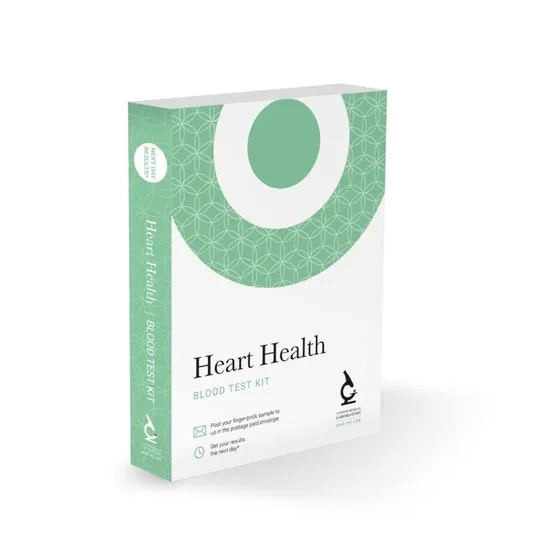
Heart Health Profile
Full cholesterol and HbA1c, with a home kit or at a collection point.
Home kitCollection pointResult in about 1 working daySee the test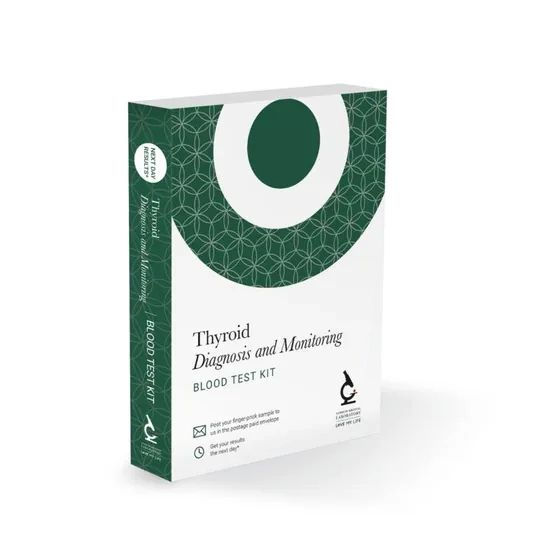
Thyroid Check
TSH and free T4, with a home kit or at a collection point.
Home kitCollection pointResult in about 1 working daySee the test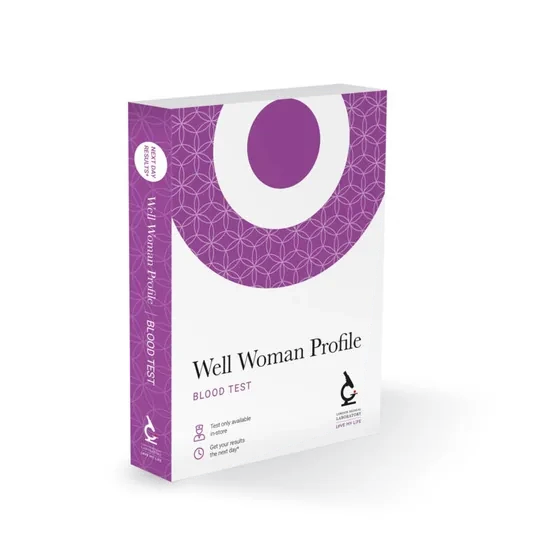
Well Woman Premier Plus
The wide panel: cholesterol, HbA1c, thyroid, full blood count, ferritin, vitamin D, B12, folate, liver and kidneys. It also has FSH, LH and oestradiol, which from 45 do not identify the menopause. At a collection point.
Collection pointResult in about 1 working daySee the test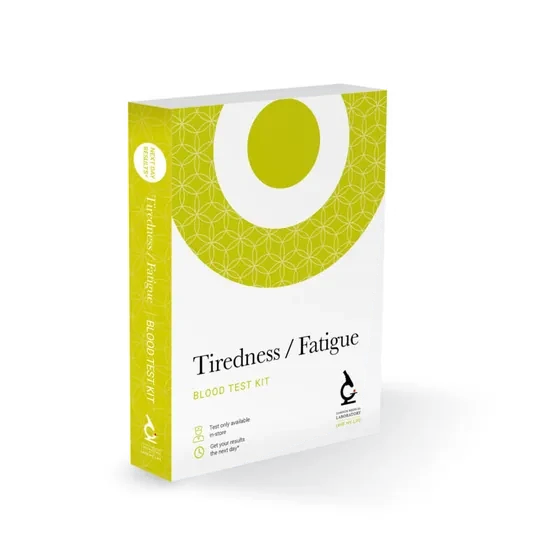
Tiredness and Fatigue Profile
For heavy periods: full blood count, ferritin, iron, vitamin D and thyroid. At a collection point.
Collection pointResult in about 1 working daySee the test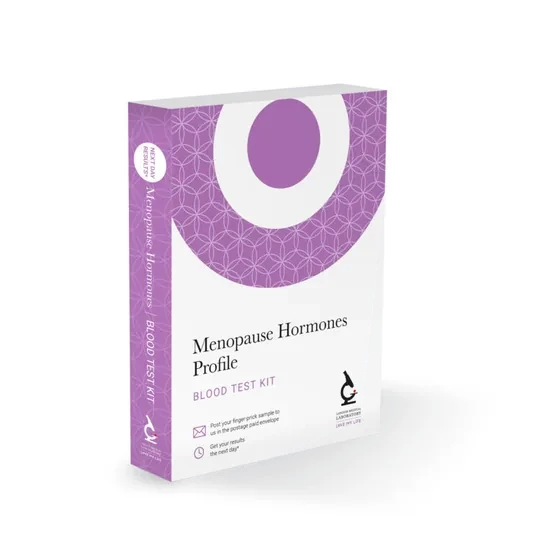
Menopause hormones
FSH, LH, oestradiol, testosterone and TSH. Only if you are 40 to 45 with symptoms and changes in your periods, or when your GP asks for it. From 45 with symptoms, you do not need it.
Home kitCollection pointResult in about 1 working daySee the test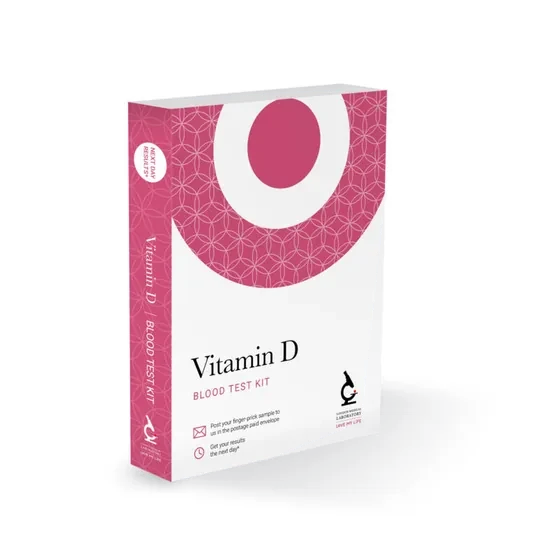
Vitamin D
Your 25(OH)D level, with a home kit, best checked in late autumn or winter.
Home kitCollection pointResult in about 1 working daySee the test
Prices are in the app, once you have an account.
What to do with your result
Your result arrives in your account, with reference ranges. A value outside the range, or a symptom with a normal result, is a conversation with your GP: treatment and supplements are their call. Repeat the same test later to compare.
Take the guide with you
The reasons, the tests and every reference, in a few pages. Free to download, no email needed.
See also
References
- 1.Matthews KA, Crawford SL, Chae CU, et al. Are changes in cardiovascular disease risk factors in midlife women due to chronological aging or to the menopausal transition?. J Am Coll Cardiol. 2009;54:2366-2373. doi:10.1016/j.jacc.2009.10.009 PMID 20082925.
- 2.El Khoudary SR, Aggarwal B, Beckie TM, et al. Menopause Transition and Cardiovascular Disease Risk: Implications for Timing of Early Prevention: A Scientific Statement From the American Heart Association. Circulation. 2020;142:e506-e532. doi:10.1161/CIR.0000000000000912 PMID 33251828.
- 3.NICE. Menopause: identification and management (NG23). nice.org.uk. 2026. www.nice.org.uk/guidance/ng23/chapter/Recommendations
- 4.NHS. What are menopause and perimenopause?. nhs.uk. 2026. www.nhs.uk/conditions/menopause-and-perimenopause/what-are-menopause-and-perimenopause/
- 5.NICE. Thyroid disease: assessment and management (NG145). nice.org.uk. 2023. www.nice.org.uk/guidance/ng145/chapter/Recommendations
- 6.NICE. Heavy menstrual bleeding: assessment and management (NG88). nice.org.uk. 2026. www.nice.org.uk/guidance/ng88/chapter/Recommendations
- 7.NICE. Type 2 diabetes: prevention in people at high risk (PH38). nice.org.uk. 2017. www.nice.org.uk/guidance/ph38/chapter/Recommendations
- 8.NHS. Menopause and perimenopause: symptoms. nhs.uk. 2026. www.nhs.uk/conditions/menopause-and-perimenopause/symptoms/
- 9.Scientific Advisory Committee on Nutrition. Vitamin D and Health. Public Health England. 2016. www.gov.uk/government/publications/sacn-vitamin-d-and-health-report
- 10.NICE. Cardiovascular disease: risk assessment and reduction, including lipid modification (NG238). nice.org.uk. 2023. www.nice.org.uk/guidance/ng238/chapter/Recommendations
- 11.NHS. NHS Health Check. nhs.uk. 2026. www.nhs.uk/tests-and-treatments/nhs-health-check/
- 12.NHS. Vitamin D. nhs.uk. 2026. www.nhs.uk/conditions/vitamins-and-minerals/vitamin-d/
General information, not personal medical advice. Talk to your GP about your own situation. Questions: write to [email protected] or message us in the app.