Blood tests for women from 60
After 60, a slow thyroid, low B12 and kidney changes become more common, often without symptoms. A blood test shows your numbers for you and your GP.

Watch: the why in a minute
Women 60 and over
1 minute 6 seconds
Why it makes sense at this stage
What the research supports, with the source of each point at the bottom of the page.
- 01
The NHS Health Check runs to 74, and cholesterol tends to be higher after the menopause
Every 5 years the NHS offers a cholesterol test, and possibly a blood sugar test. Cholesterol rises around the last period and gives no symptoms.[1, 2, 3]
- 02
A slow thyroid becomes more common with age, especially in women
In a 20 year UK study, the risk rose with age, and women had 3.5 new cases per 1,000 a year, against 0.6 in men. A TSH and T4 blood test is how it is measured.[4, 5]
- 03
Low B12 becomes more common after 65
In 3,511 people in the UK aged 65 or over, it went from about 1 in 20 at 65 to 74 to 1 in 10 or more from 75. Some common medicines, such as metformin and acid reflux tablets, lower it.[6, 7]
- 04
Early kidney disease gives no warning, and is linked to age
There are usually no symptoms in the early stages. Creatinine and eGFR come in the same sample.[8]
- 05
Staying active does not cancel out heart risk
The NHS suggests at least 150 minutes of moderate activity a week from 65, with strength, balance and flexibility on at least 2 days. For athletes over 35, the European sports cardiology guideline focuses on the heart arteries and uses cholesterol in its risk score. Being cleared to train is a clinical assessment.[9, 10]
The tests and why
What usually makes sense for this group. Your GP can tell you what fits your own case.
Cholesterol profile
Cholesterol tends to be higher after the menopause, and it gives no symptoms.[1, 2, 3]
When to repeat: Every 5 years at the NHS Health Check up to 74, or as your GP advises.
HbA1c (average blood sugar)
Blood sugar can be part of the NHS Health Check. Type 2 diabetes does not always cause symptoms.[1, 11]
When to repeat: Every 5 years at the NHS Health Check, or as your GP advises.
TSH and free T4 (thyroid)
An underactive thyroid becomes more common with age, especially in women.[4, 5]
When to repeat: If you have symptoms, or as your GP advises.
Vitamin B12 and folate
Low B12 becomes more common after 65, and some common medicines, such as metformin and acid reflux tablets, lower it.[6, 7]
When to repeat: As your GP advises; more often on metformin or reflux tablets.
Kidney function (creatinine, eGFR)
Early kidney disease usually has no symptoms and is linked to getting older.[8]
When to repeat: With your cholesterol; more often with high blood pressure or diabetes.
What a blood test can and cannot do
It can
- Show how your thyroid is working, with TSH and T4
- Show your B12, which some common medicines lower
- Show your cholesterol, blood sugar and kidneys, which give no early symptoms
It cannot
- Show your bone density or risk of falls: bone is measured with a DEXA scan
- Clear you to train or assess your heart: it shows risk factors
- Change your medicines because of B12: that is with your GP
Tests that cover these markers
Not sure which one? The guided check-up suggests a starting point in a few questions.
Find your check-up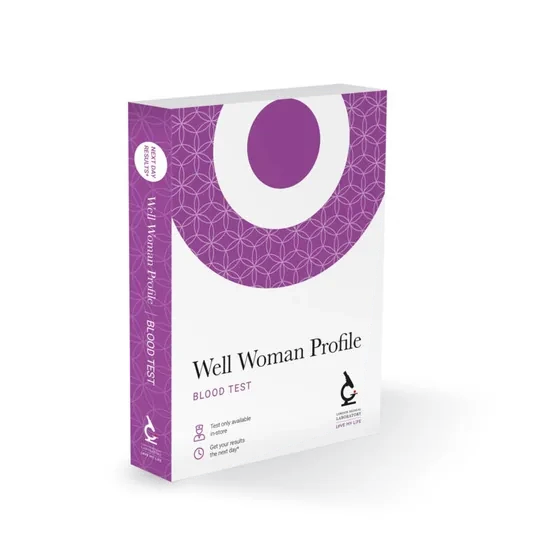
Well Woman Premier Plus Profile
One test for all of it: cholesterol, HbA1c, kidneys, liver, blood count, ferritin, thyroid, vitamin D, B12 and folate. It needs a blood sample from a vein, at a collection point.
Collection pointResult in about 1 working daySee the test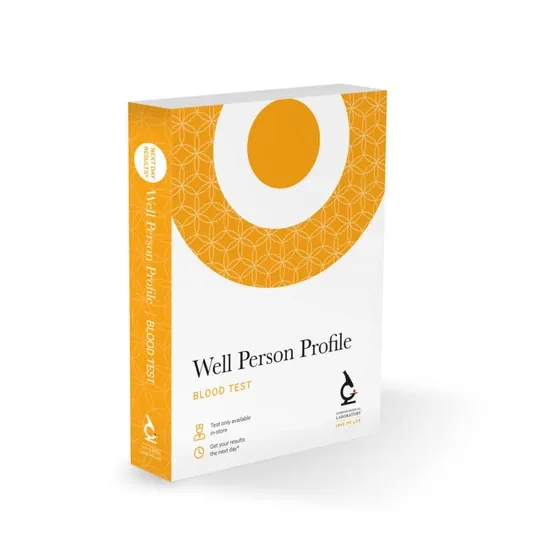
Well Person Premier Plus Profile
The same without hormones, vitamin D or B12; add the vitamins below. It needs a blood sample from a vein, at a collection point.
Collection pointResult in about 1 working daySee the test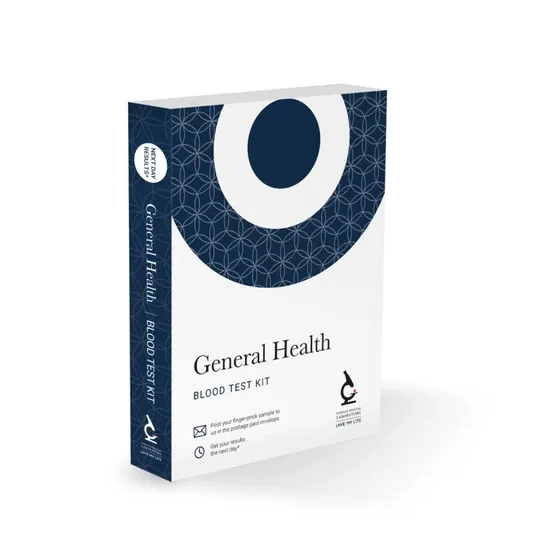
General Health Profile
Home kit with full cholesterol, HbA1c, kidneys and liver. It has no blood count; add vitamins and thyroid below.
Home kitCollection pointResult in about 1 working daySee the test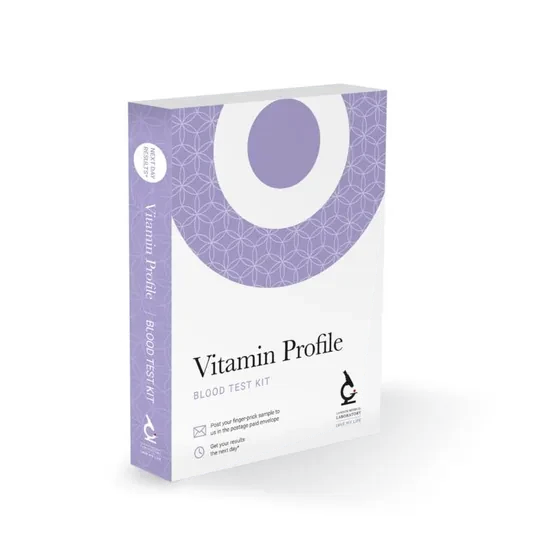
Vitamins D, B12 and folate
Vitamin D, B12 and folate together.
Home kitCollection pointResult in about 1 working daySee the test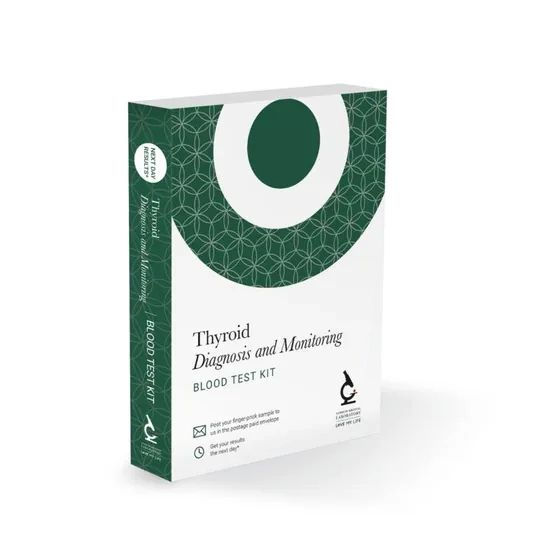
Thyroid Check
TSH and free T4: how your thyroid is working.
Home kitCollection pointResult in about 1 working daySee the test
Prices are in the app, once you have an account.
What to do with your result
Your result arrives in your account, with reference ranges. A value outside the range, or a symptom with a normal result, is a conversation with your GP: treatment and supplements are their call. Repeat the same test later to compare.
Take the guide with you
The reasons, the tests and every reference, in a few pages. Free to download, no email needed.
See also
References
- 1.NHS. NHS Health Check. nhs.uk. 2026. www.nhs.uk/tests-and-treatments/nhs-health-check/
- 2.Matthews KA, Crawford SL, Chae CU, et al. Are changes in cardiovascular disease risk factors in midlife women due to chronological aging or to the menopausal transition?. J Am Coll Cardiol. 2009;54:2366-2373. doi:10.1016/j.jacc.2009.10.009 PMID 20082925.
- 3.NHS. High cholesterol. nhs.uk. 2026. www.nhs.uk/conditions/high-cholesterol/
- 4.Vanderpump MP, Tunbridge WM, French JM, et al. The incidence of thyroid disorders in the community: a twenty-year follow-up of the Whickham Survey. Clin Endocrinol (Oxf). 1995;43:55-68. doi:10.1111/j.1365-2265.1995.tb01894.x PMID 7641412.
- 5.NHS. Underactive thyroid (hypothyroidism). nhs.uk. 2026. www.nhs.uk/conditions/underactive-thyroid-hypothyroidism/
- 6.Clarke R, Grimley Evans J, Schneede J, et al. Vitamin B12 and folate deficiency in later life. Age Ageing. 2004;33:34-41. doi:10.1093/ageing/afg109 PMID 14695861.
- 7.NHS. Vitamin B12 or folate deficiency anaemia: causes. nhs.uk. 2026. www.nhs.uk/conditions/vitamin-b12-or-folate-deficiency-anaemia/causes/
- 8.NHS. Chronic kidney disease. nhs.uk. 2026. www.nhs.uk/conditions/kidney-disease/
- 9.NHS. Physical activity guidelines for older adults. nhs.uk. 2026. www.nhs.uk/live-well/exercise/physical-activity-guidelines-older-adults/
- 10.Pelliccia A, Sharma S, Gati S, et al. 2020 ESC Guidelines on sports cardiology and exercise in patients with cardiovascular disease. Eur Heart J. 2021;42:17-96. doi:10.1093/eurheartj/ehaa605 PMID 32860412.
- 11.NHS. Type 2 diabetes: symptoms. nhs.uk. 2026. www.nhs.uk/conditions/type-2-diabetes/symptoms/
- 12.NHS. Iron deficiency anaemia. nhs.uk. 2026. www.nhs.uk/conditions/iron-deficiency-anaemia/
- 13.NHS. Vitamin D. nhs.uk. 2026. www.nhs.uk/conditions/vitamins-and-minerals/vitamin-d/
- 14.NHS. Osteoporosis. nhs.uk. 2026. www.nhs.uk/conditions/osteoporosis/
General information, not personal medical advice. Talk to your GP about your own situation. Questions: write to [email protected] or message us in the app.