Blood tests for women from 40 to 59
Around the menopause some numbers change, such as cholesterol, and they give no symptoms. A blood test shows them, so you can talk them through with your GP.

Why it makes sense at this stage
What the research supports, with the source of each point at the bottom of the page.
- 01
From 40, the NHS itself checks your risk
From 40 to 74 the NHS offers a Health Check every 5 years, with a cholesterol test, and possibly a blood sugar test. Your own results help if you have not been invited yet, or want to follow your numbers in between.[1]
- 02
Cholesterol tends to rise around your last period
In a study that followed 1,054 women for 10 years, total and LDL cholesterol rose sharply in the year before and the year after the last period. The NHS lists the menopause among the things that make high cholesterol more likely.[2, 3]
- 03
There is no routine test for the menopause
The NHS says there is no routine test for perimenopause and menopause. The useful tests at this stage look at what changes with it, such as cholesterol and blood sugar.[4]
- 04
A slow thyroid is more common in women, and can feel like the menopause
In a 20 year UK study, women had about six times as many new cases as men, and the risk rose with age. Tiredness, weight and mood can come from either; a TSH test helps tell them apart.[5, 6]
- 05
While you still have periods, they count for iron
Heavy periods are a very common cause of low iron, and your GP will often ask for a blood test if your periods are heavy.[7, 8]
The tests and why
What usually makes sense for this group. Your GP can tell you what fits your own case.
Cholesterol profile
Cholesterol tends to rise around the menopause, and it does not cause symptoms.[1, 2, 3]
When to repeat: Every 5 years at the NHS Health Check; more often if your GP advises.
HbA1c (average blood sugar)
Blood sugar can be part of the NHS Health Check from 40. Type 2 diabetes does not always cause symptoms.[1, 9]
When to repeat: Every 5 years at the NHS Health Check, or as your GP advises.
TSH and free T4 (thyroid)
An underactive thyroid is more common in women, and its symptoms can look like the menopause.[5, 6]
When to repeat: If you have symptoms, or as your GP advises.
Ferritin and full blood count
Heavy periods are a very common cause of low iron. Ferritin shows your stores; the blood count shows anaemia.[7, 8, 10]
When to repeat: With heavy periods or tiredness; again as your GP advises.
Vitamin D, 25(OH)D
From October to early March, UK sunlight is not enough to make vitamin D. Women also lose bone quickly in the first years after the menopause.[11, 12]
When to repeat: Once in late winter.
Kidney function (creatinine, eGFR)
Early kidney disease usually has no symptoms, and kidney risk is part of what the NHS Health Check looks at.[1, 13]
When to repeat: With your cholesterol.
Sexual health screen
The NHS suggests a test once a year or with a new partner, at any age.[14]
When to repeat: With a new partner.
What a blood test can and cannot do
It can
- Show your cholesterol and blood sugar as the menopause comes
- Show how your thyroid is working, when symptoms overlap
- Give you numbers to talk through with your GP
It cannot
- Confirm the menopause: there is no routine test for it
- Show your bone density: that is a DEXA scan
- Decide on hormone therapy: that is a decision with your GP
Tests that cover these markers
Not sure which one? The guided check-up suggests a starting point in a few questions.
Find your check-up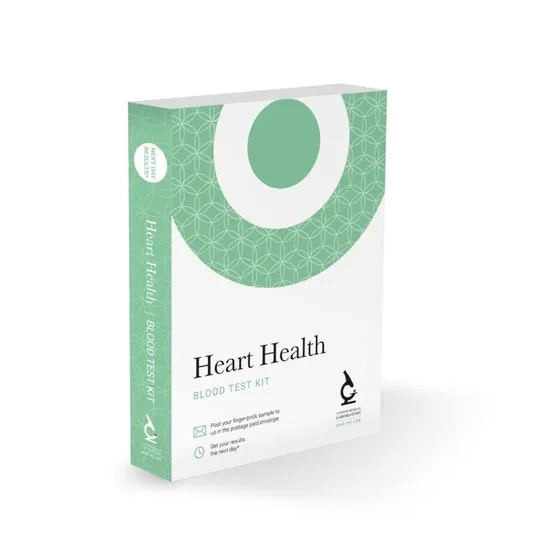
Heart Health Profile
Home kit with full cholesterol, HbA1c and high-sensitivity CRP. Add thyroid, iron and vitamin D below if you need them.
Home kitCollection pointResult in about 1 working daySee the test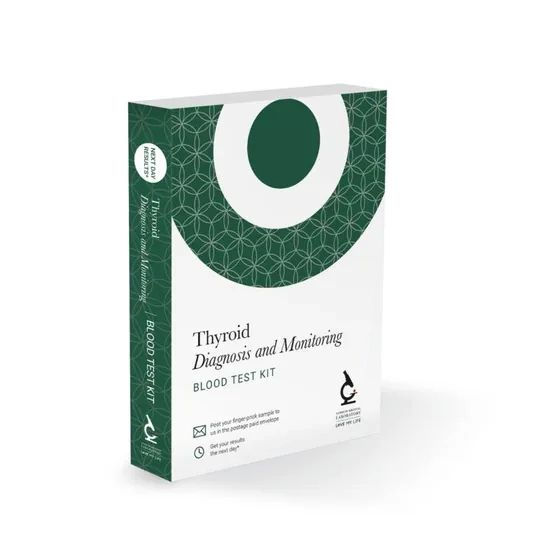
Thyroid Check
TSH and free T4: how your thyroid is working.
Home kitCollection pointResult in about 1 working daySee the test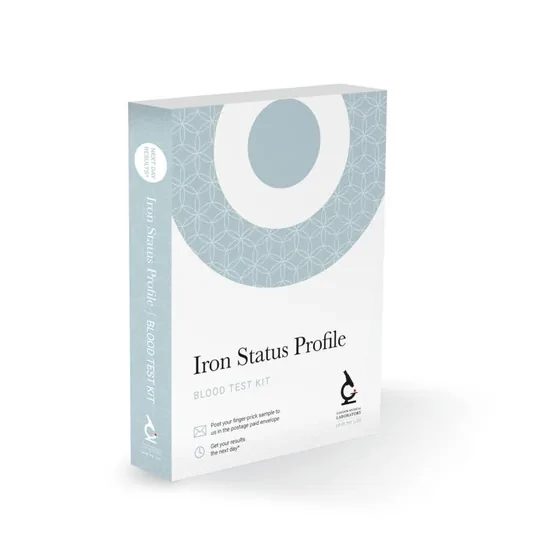
Iron and iron stores
Ferritin, iron and transferrin saturation, if your periods are heavy.
Home kitCollection pointResult in about 1 working daySee the test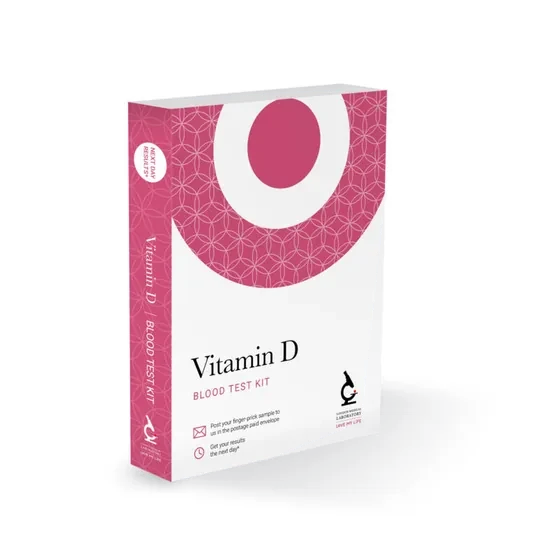
Vitamin D
Your 25(OH)D level, best checked in late winter.
Home kitCollection pointResult in about 1 working daySee the test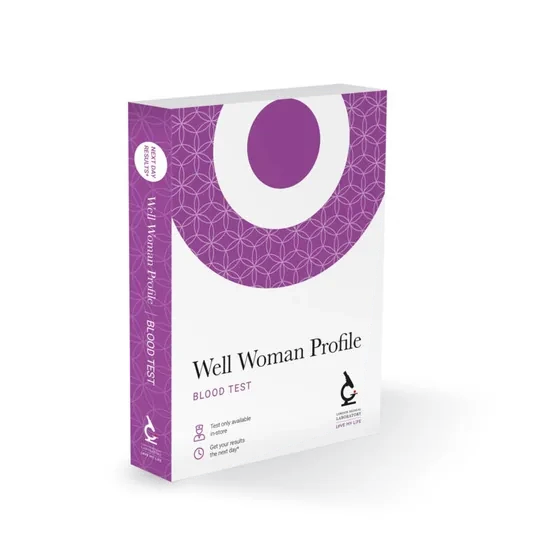
Well Woman Premier Plus Profile
One test for all of it, with kidneys, liver, vitamin D and B12. It also has LH, FSH and oestradiol, which are not used to confirm the menopause. It needs a blood sample from a vein, at a collection point.
Collection pointResult in about 1 working daySee the test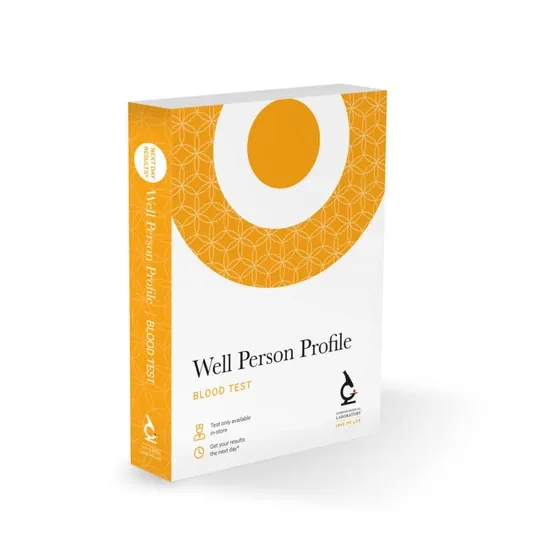
Well Person Premier Plus Profile
Blood count, ferritin, thyroid, cholesterol, HbA1c, liver and kidneys, without hormones. Add vitamin D. It needs a blood sample from a vein, at a collection point.
Collection pointResult in about 1 working daySee the test
Prices are in the app, once you have an account.
What to do with your result
Your result arrives in your account, with reference ranges. A value outside the range, or a symptom with a normal result, is a conversation with your GP: treatment and supplements are their call. Repeat the same test later to compare.
Take the guide with you
The reasons, the tests and every reference, in a few pages. Free to download, no email needed.
See also
References
- 1.NHS. NHS Health Check. nhs.uk. 2026. www.nhs.uk/tests-and-treatments/nhs-health-check/
- 2.Matthews KA, Crawford SL, Chae CU, et al. Are changes in cardiovascular disease risk factors in midlife women due to chronological aging or to the menopausal transition?. J Am Coll Cardiol. 2009;54:2366-2373. doi:10.1016/j.jacc.2009.10.009 PMID 20082925.
- 3.NHS. High cholesterol. nhs.uk. 2026. www.nhs.uk/conditions/high-cholesterol/
- 4.NHS. What are menopause and perimenopause?. nhs.uk. 2026. www.nhs.uk/conditions/menopause-and-perimenopause/what-are-menopause-and-perimenopause/
- 5.NHS. Underactive thyroid (hypothyroidism). nhs.uk. 2026. www.nhs.uk/conditions/underactive-thyroid-hypothyroidism/
- 6.Vanderpump MP, Tunbridge WM, French JM, et al. The incidence of thyroid disorders in the community: a twenty-year follow-up of the Whickham Survey. Clin Endocrinol (Oxf). 1995;43:55-68. doi:10.1111/j.1365-2265.1995.tb01894.x PMID 7641412.
- 7.NHS. Iron deficiency anaemia. nhs.uk. 2026. www.nhs.uk/conditions/iron-deficiency-anaemia/
- 8.NHS. Heavy periods. nhs.uk. 2026. www.nhs.uk/conditions/heavy-periods/
- 9.NHS. Type 2 diabetes: symptoms. nhs.uk. 2026. www.nhs.uk/conditions/type-2-diabetes/symptoms/
- 10.Pasricha SR, Tye-Din J, Muckenthaler MU, Swinkels DW. Iron deficiency. Lancet. 2021;397:233-248. doi:10.1016/S0140-6736(20)32594-0 PMID 33285139.
- 11.NHS. Vitamin D. nhs.uk. 2026. www.nhs.uk/conditions/vitamins-and-minerals/vitamin-d/
- 12.NHS. Osteoporosis. nhs.uk. 2026. www.nhs.uk/conditions/osteoporosis/
- 13.NHS. Chronic kidney disease. nhs.uk. 2026. www.nhs.uk/conditions/kidney-disease/
- 14.NHS. Chlamydia. nhs.uk. 2026. www.nhs.uk/conditions/chlamydia/
General information, not personal medical advice. Talk to your GP about your own situation. Questions: write to [email protected] or message us in the app.