Blood tests for shift work and nights
Large studies link night shifts to higher blood sugar, less healthy cholesterol and low vitamin D. None of it gives signs; a blood test shows where you stand.

Watch: the why in a minute
Shift work
1 minute 3 seconds
Why it makes sense at this stage
What the research supports, with the source of each point at the bottom of the page.
- 01
Night work is linked to type 2 diabetes, and the number of nights matters
In the UK Biobank, with more than 270,000 people, shifts with nights were linked to type 2 diabetes, and more than 8 nights a month to higher odds still. A review of 12 studies found the link too, stronger in men and in rotating shifts.[1, 2]
- 02
Shifts, especially permanent nights, are linked to less healthy cholesterol
In a review of 66 studies with 197,063 workers, shift work went with higher triglycerides and lower HDL; permanent nights also with higher total cholesterol. Another review found a 30% higher risk of metabolic syndrome.[3, 4]
- 03
Shift work is linked to heart attack and stroke
In a review of 34 studies with 2 million people, shift work was linked to heart attack (23% more) and ischaemic stroke (5% more).[5]
- 04
Sleeping by day means little sun: low vitamin D is the rule
In a review by job, shift workers averaged 33.8 nmol/L, and 80% were under 50 nmol/L. In the UK, from October to March, even people out by day do not make enough.[6, 7]
- 05
The numbers that matter give no signs
Cholesterol and HbA1c only show in a blood test. UK guidance works out heart risk from 25, and encourages a diabetes risk check from 40, or from 25 in higher-risk groups.[8, 9]
The tests and why
What usually makes sense for this group. Your GP can tell you what fits your own case.
HbA1c (average blood sugar)
Your average blood sugar over the past two to three months. Night shifts are linked to type 2 diabetes, and HbA1c needs no fasting, which helps when your meals move around.[1, 2, 9]
When to repeat: Once a year if you work nights often, or as your GP advises.
Cholesterol (total, LDL, HDL, non-HDL, triglycerides)
Shift work, especially permanent nights, is linked to higher triglycerides and lower HDL, the 'good' cholesterol. No fasting needed.[3, 4, 8]
When to repeat: With your HbA1c.
Vitamin D, 25(OH)D
Shift workers have some of the lowest vitamin D levels of any job group. Less daylight means less vitamin D.[6, 7, 10]
When to repeat: Late autumn or winter; after supplements, as your GP advises.
Full blood count, ferritin and thyroid (tiredness that does not pass)
Shift work makes you tired, but it is not the only possible reason. Iron, red cells and thyroid are common first checks; one symptom alone may not point to the thyroid.[11]
When to repeat: When tiredness does not ease with rest; talk to your GP.
What a blood test can and cannot do
It can
- Show your blood sugar and cholesterol, which give no signs
- Show your vitamin D when you see little daylight
- Check common reasons for tiredness that does not pass
It cannot
- Show that your shifts caused a result: the studies show links, not cause
- Show how your body clock is coping: there is no checked blood marker for that
- Explain tiredness on its own: what to do is your GP's call
Tests that cover these markers
Not sure which one? The guided check-up suggests a starting point in a few questions.
Find your check-up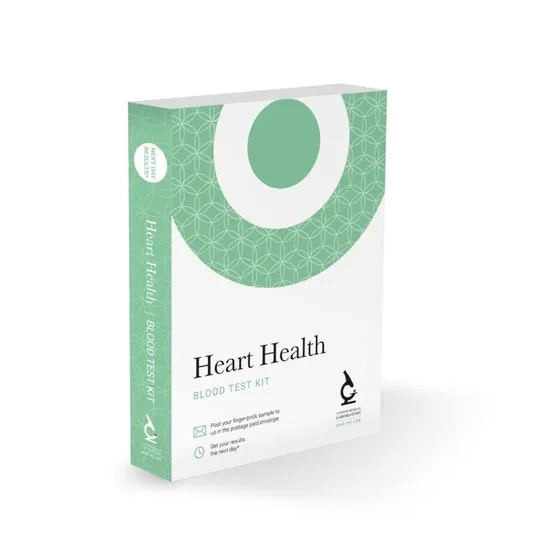
Heart Health Profile
Full cholesterol and HbA1c, with a home kit that fits around your shifts, or at a collection point.
Home kitCollection pointResult in about 1 working daySee the test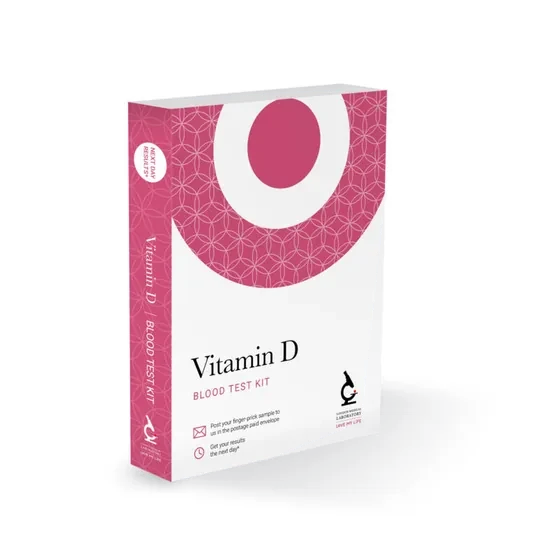
Vitamin D
Your 25(OH)D level, with a home kit, best checked in late autumn or winter.
Home kitCollection pointResult in about 1 working daySee the test
Well Man Premier Plus
The wide panel for men: cholesterol, HbA1c, vitamin D, B12, folate, full blood count, ferritin, thyroid, liver and kidneys. At a collection point.
Collection pointResult in about 1 working daySee the test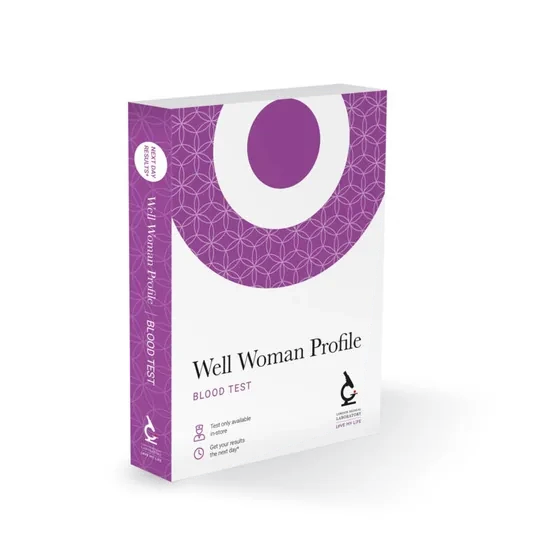
Well Woman Premier Plus
The wide panel for women: cholesterol, HbA1c, vitamin D, B12, folate, full blood count, ferritin, thyroid, liver and kidneys. At a collection point.
Collection pointResult in about 1 working daySee the test
Tiredness and Fatigue Profile
For tiredness that does not pass: full blood count, iron, ferritin, vitamin D and thyroid. At a collection point.
Collection pointResult in about 1 working daySee the test
Prices are in the app, once you have an account.
What to do with your result
Your result arrives in your account, with reference ranges. A value outside the range, or a symptom with a normal result, is a conversation with your GP: treatment and supplements are their call. Repeat the same test later to compare.
Take the guide with you
The reasons, the tests and every reference, in a few pages. Free to download, no email needed.
See also
References
- 1.Vetter C, Dashti HS, Lane JM, et al. Night Shift Work, Genetic Risk, and Type 2 Diabetes in the UK Biobank. Diabetes Care. 2018;41:762-769. doi:10.2337/dc17-1933 PMID 29440150.
- 2.Gan Y, Yang C, Tong X, et al. Shift work and diabetes mellitus: a meta-analysis of observational studies. Occup Environ Med. 2015;72:72-78. doi:10.1136/oemed-2014-102150 PMID 25030030.
- 3.Dutheil F, Baker JS, Mermillod M, et al. Shift work, and particularly permanent night shifts, promote dyslipidaemia: A systematic review and meta-analysis. Atherosclerosis. 2020;313:156-169. doi:10.1016/j.atherosclerosis.2020.08.015 PMID 33069952.
- 4.Yang X, Di W, Zeng Y, et al. Association between shift work and risk of metabolic syndrome: A systematic review and meta-analysis. Nutr Metab Cardiovasc Dis. 2021;31:2792-2799. doi:10.1016/j.numecd.2021.06.007 PMID 34332862.
- 5.Vyas MV, Garg AX, Iansavichus AV, et al. Shift work and vascular events: systematic review and meta-analysis. BMJ. 2012;345:e4800. doi:10.1136/bmj.e4800 PMID 22835925.
- 6.Sowah D, Fan X, Dennett L, Hagtvedt R, Straube S. Vitamin D levels and deficiency with different occupations: a systematic review. BMC Public Health. 2017;17:519. doi:10.1186/s12889-017-4436-z PMID 28637448.
- 7.NHS. Vitamin D. nhs.uk. 2026. www.nhs.uk/conditions/vitamins-and-minerals/vitamin-d/
- 8.NICE. Cardiovascular disease: risk assessment and reduction, including lipid modification (NG238). nice.org.uk. 2023. www.nice.org.uk/guidance/ng238/chapter/Recommendations
- 9.NICE. Type 2 diabetes: prevention in people at high risk (PH38). nice.org.uk. 2017. www.nice.org.uk/guidance/ph38/chapter/Recommendations
- 10.Scientific Advisory Committee on Nutrition. Vitamin D and Health. Public Health England. 2016. www.gov.uk/government/publications/sacn-vitamin-d-and-health-report
- 11.NICE. Thyroid disease: assessment and management (NG145). nice.org.uk. 2023. www.nice.org.uk/guidance/ng145/chapter/Recommendations
General information, not personal medical advice. Talk to your GP about your own situation. Questions: write to [email protected] or message us in the app.