Tired this winter?
Feeling tired in winter is common and has many causes. In the UK, from October to March, the sun is too weak for your skin to make vitamin D. Iron, ferritin, B12, folate, thyroid and vitamin D are simple blood tests that help you see what is going on. Then talk to your doctor.

Why it makes sense at this stage
What the research supports, with the source of each point at the bottom of the page.
- 01
Tiredness is common and has many causes
UK guidance for doctors calls tiredness one of the most frequent reasons people see their doctor. It can come from sleep, rest and exercise out of balance, stress, medicines, or a condition such as anaemia.[1]
- 02
From October to March, UK sunlight is too weak for vitamin D
Your skin makes vitamin D from direct sunlight, but between October and early March the UK sun is not strong enough. UK advice is 10 micrograms a day for everyone, and to consider a supplement in autumn and winter.[2, 3]
- 03
Low iron is a common reason for feeling tired
Tiredness and lack of energy are among the most common signs of iron deficiency anaemia. Iron deficiency is one of the leading causes of anaemia worldwide, and iron stores can run low before anaemia shows.[4, 5]
- 04
A slow thyroid can feel like tiredness
Tiredness, feeling cold, weight gain and low mood are common with an underactive thyroid, and they come on slowly. A TSH blood test, often with free T4, shows how your thyroid is working.[6, 7]
- 05
Doctors usually start with a few simple blood tests
For tiredness, UK guidance for doctors lists a full blood count, ferritin and thyroid tests among the first checks, with vitamin D, B12 and folate depending on the person. Having your numbers makes that talk with your doctor easier.[8]
The tests and why
What usually makes sense for this group. A doctor you trust can tell you what fits your own case.
Full blood count
Red cells, haemoglobin, white cells and platelets. Anaemia is one of the first things doctors look at when someone is tired.[4, 8]
When to repeat: As your doctor advises, or a few months after a change, to compare.
Iron and ferritin
Ferritin shows your iron stores, which can be low before haemoglobin drops.[4, 5]
When to repeat: A few months after any change in diet or supplements, to compare.
Thyroid (TSH and free T4)
How your thyroid is working. A slow thyroid often shows up as tiredness and feeling cold.[6, 7]
When to repeat: As your doctor advises.
Vitamin D, 25(OH)D
Your vitamin D level after months of weak sun. Winter is when it tends to be lowest.[2, 3]
When to repeat: Late winter, and again at the end of summer to compare.
From 40: cholesterol, HbA1c, liver and kidneys
From 40, the NHS Health Check looks at cholesterol and sometimes blood sugar every 5 years. The general profile adds liver, kidneys and iron.[9]
When to repeat: Once a year, or as your doctor advises.
What a blood test can and cannot do
It can
- Show your iron, ferritin, thyroid and vitamin D, some of the first things looked at when you feel tired
- Give you and your doctor real numbers to talk about
- Give you a starting point to compare with a later test
It cannot
- Tell you on its own why you are tired: sleep, stress, mood and medicines also count
- Replace your doctor when tiredness lasts, gets worse or comes with other changes
Tests that cover these markers
Not sure which one? The guided check-up suggests a starting point in a few questions.
Find your check-up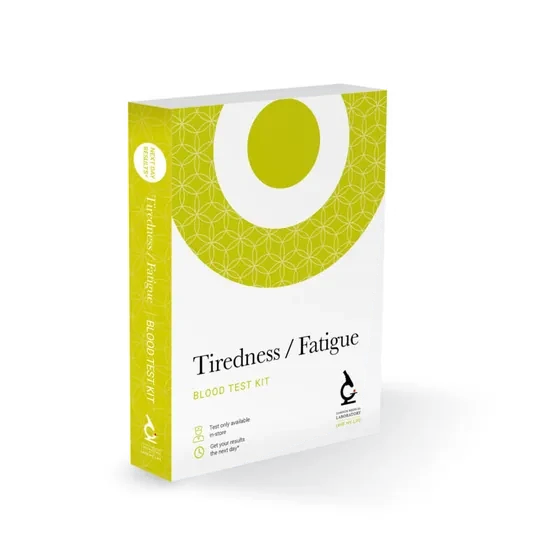
Tiredness and Fatigue Profile
The main test for a tired winter: full blood count, iron, ferritin, thyroid (TSH and free T4) and vitamin D in one blood sample.
Collection pointAt home on requestResult in about 1 working daySee the test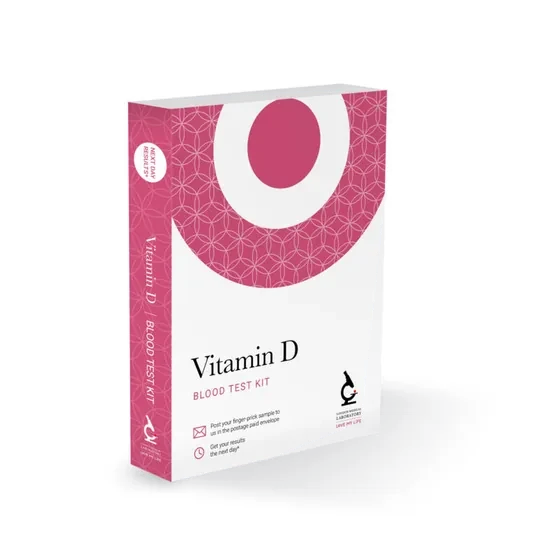
Vitamin D
The simplest start: your 25(OH)D level, best checked in winter.
Home kitCollection pointAt home on requestResult in about 1 working daySee the test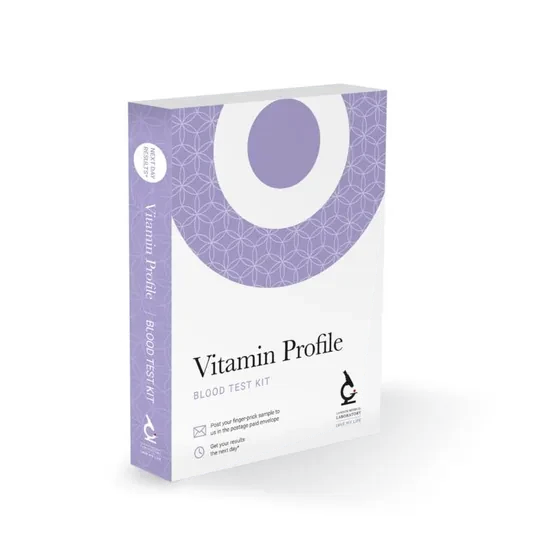
Vitamins D, B12 and folate
Vitamin D with B12 and folate in one sample, for when your doctor also wants to look at B12 and folate.
Home kitCollection pointAt home on requestResult in about 1 working daySee the test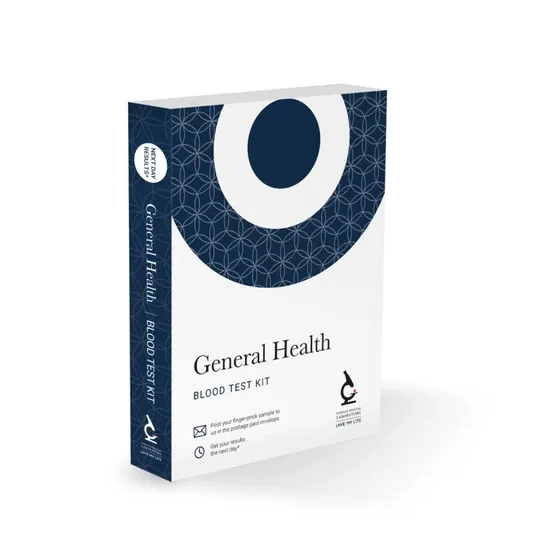
General Health Profile
For 40 and over: cholesterol, HbA1c, liver, kidneys and iron. It has no vitamin D or thyroid, so add the vitamin D test.
Home kitCollection pointAt home on requestResult in about 1 working daySee the test
Next step: pick one test, give the sample with a home kit or at a collection point, and take your result to your doctor.
Create your free account to see prices and orderWhat to do with your result
Your result arrives in your account, with reference ranges. A value outside the range, or a symptom with a normal result, is a conversation with a doctor you trust: treatment and supplements are their call. Repeat the same test later to compare.
See also
References
- 1.NICE Clinical Knowledge Summaries. Tiredness/fatigue in adults. cks.nice.org.uk. 2025. cks.nice.org.uk/topics/tiredness-fatigue-in-adults/
- 2.NHS. Vitamin D. nhs.uk. 2026. www.nhs.uk/conditions/vitamins-and-minerals/vitamin-d/
- 3.Scientific Advisory Committee on Nutrition. Vitamin D and Health. Public Health England. 2016. www.gov.uk/government/publications/sacn-vitamin-d-and-health-report
- 4.NHS. Iron deficiency anaemia. nhs.uk. 2026. www.nhs.uk/conditions/iron-deficiency-anaemia/
- 5.Pasricha SR, Tye-Din J, Muckenthaler MU, Swinkels DW. Iron deficiency. Lancet. 2021;397:233-248. doi:10.1016/S0140-6736(20)32594-0 PMID 33285139.
- 6.NHS. Underactive thyroid (hypothyroidism). nhs.uk. 2026. www.nhs.uk/conditions/underactive-thyroid-hypothyroidism/
- 7.NICE. Thyroid disease: assessment and management (NG145). nice.org.uk. 2023. www.nice.org.uk/guidance/ng145/chapter/Recommendations
- 8.NICE Clinical Knowledge Summaries. Tiredness/fatigue in adults: assessment. cks.nice.org.uk. 2025. cks.nice.org.uk/topics/tiredness-fatigue-in-adults/diagnosis/assessment/
- 9.NHS. NHS Health Check. nhs.uk. 2026. www.nhs.uk/tests-and-treatments/nhs-health-check/
General information, not personal medical advice. Talk to a doctor you trust, such as your GP, about your own situation. Questions: write to [email protected] or message us in the app.