Blood tests from 18 to 29: your first numbers
Most things worth knowing at this age give no symptoms. A first set of results gives you a baseline to compare with later, and shows what you can change now.

Watch: the why in a minute
18 to 29
1 minute 4 seconds
Why it makes sense at this stage
What the research supports, with the source of each point at the bottom of the page.
- 01
High cholesterol gives no symptoms, and some of it runs in families
The only way to know your level is a blood test. About 1 in 250 people have a type of high cholesterol that runs in families. A first result gives you a baseline.[1, 2]
- 02
Low vitamin D is common in UK winters
From October to early March, sunlight in the UK is not enough to make vitamin D. In a UK winter study, 22 of 30 healthy adults were under 50 nmol/L.[3, 4, 5]
- 03
Low iron is frequent in young women, even without anaemia
Women of reproductive age are at higher risk, and heavy periods are a common cause. Low iron can matter before anaemia shows.[6, 7, 8]
- 04
Type 2 diabetes can start early, often without symptoms
The NHS lists a higher risk from 25 for people of South Asian, Chinese, Black African or Black Caribbean background, and says not everyone has symptoms.[9]
The tests and why
What usually makes sense for this group. Your GP can tell you what fits your own case.
Cholesterol profile
Total, HDL, non-HDL and LDL cholesterol, and triglycerides. High cholesterol does not usually cause symptoms, and about 1 in 250 people have a type that runs in families.[1, 2, 10]
When to repeat: As your GP advises. The NHS Health Check starts at 40.
HbA1c (average blood sugar)
Type 2 diabetes can start from 25 in some ethnic groups, often without symptoms.[9]
When to repeat: As your GP advises.
Vitamin D, 25(OH)D
In the UK, from October to early March sunlight is not enough to make vitamin D. Late winter shows your lowest level.[3, 4, 5]
When to repeat: Once in late winter; again after supplements, as your GP advises.
Ferritin and iron
Your iron stores. Low iron is common in young women, especially with heavy periods, and can matter before anaemia shows.[6, 7, 8]
When to repeat: If low, as your GP advises.
Vitamin B12 (vegan or strict vegetarian diet)
A vegan diet without B12 supplements is a known cause of low B12.[11]
When to repeat: Once a year on a vegan diet.
What a blood test can and cannot do
It can
- Give you a baseline to compare with later
- Show your cholesterol, which gives no symptoms
- Show your iron stores and your vitamin D in winter
It cannot
- Change anything on its own: what to do is your GP's call
- Explain tiredness by itself: low ferritin is one factor among many
- Replace an NHS programme: there is no routine NHS blood test at this age
Tests that cover these markers
Not sure which one? The guided check-up suggests a starting point in a few questions.
Find your check-up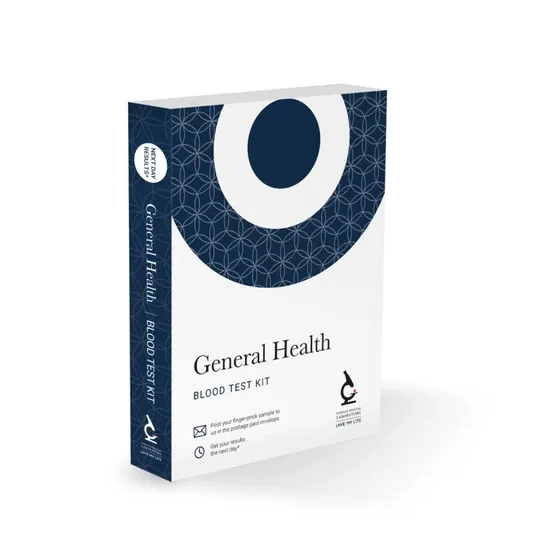
General Health Profile
Full cholesterol, HbA1c, liver, kidneys and iron. It has no ferritin or vitamin D, so add those below if you need them.
Home kitCollection pointResult in about 1 working daySee the test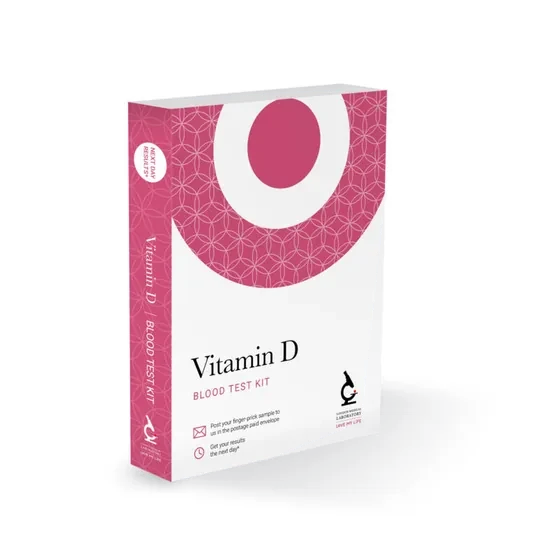
Vitamin D
Your 25(OH)D level, best checked in late winter.
Home kitCollection pointResult in about 1 working daySee the test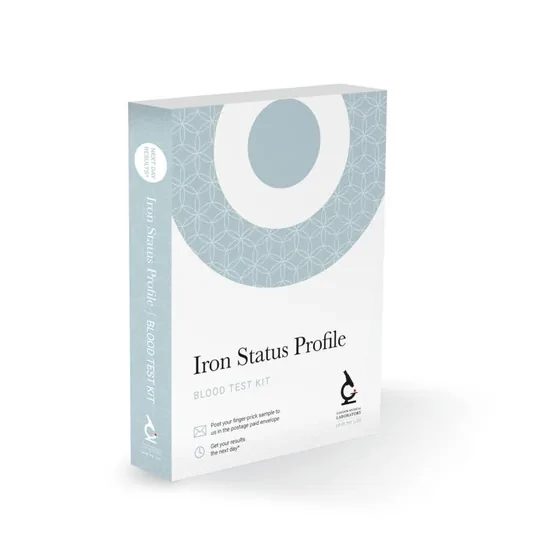
Iron and iron stores
Ferritin, iron and transferrin saturation: the iron picture on its own.
Home kitCollection pointResult in about 1 working daySee the test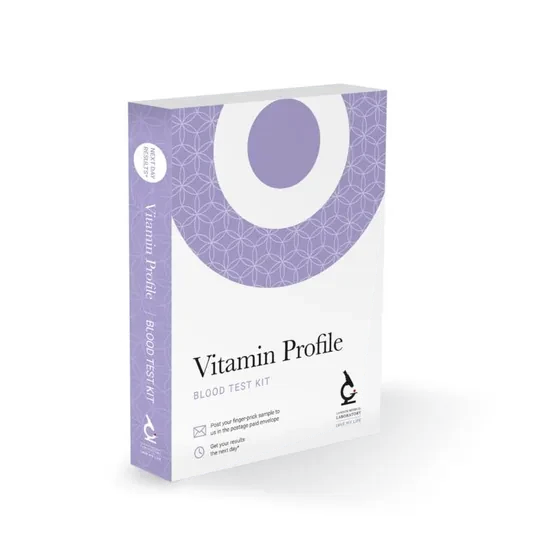
Vitamins D, B12 and folate
Vitamin D with B12 and folate, in place of vitamin D alone if you eat a vegan diet.
Home kitCollection pointResult in about 1 working daySee the test
Prices are in the app, once you have an account.
What to do with your result
Your result arrives in your account, with reference ranges. A value outside the range, or a symptom with a normal result, is a conversation with your GP: treatment and supplements are their call. Repeat the same test later to compare.
Take the guide with you
The reasons, the tests and every reference, in a few pages. Free to download, no email needed.
References
- 1.NHS. High cholesterol. nhs.uk. 2026. www.nhs.uk/conditions/high-cholesterol/
- 2.Akioyamen LE, Genest J, Shan SD, et al. Estimating the prevalence of heterozygous familial hypercholesterolaemia: a systematic review and meta-analysis. BMJ Open. 2017;7:e016461. doi:10.1136/bmjopen-2017-016461 PMID 28864697.
- 3.NHS. Vitamin D. nhs.uk. 2026. www.nhs.uk/conditions/vitamins-and-minerals/vitamin-d/
- 4.Scientific Advisory Committee on Nutrition. Vitamin D and Health. Public Health England. 2016. www.gov.uk/government/publications/sacn-vitamin-d-and-health-report
- 5.Close GL, Russell J, Cobley JN, et al. Assessment of vitamin D concentration in non-supplemented professional athletes and healthy adults during the winter months in the UK: implications for skeletal muscle function. J Sports Sci. 2013;31:344-353. doi:10.1080/02640414.2012.733822 PMID 23083379.
- 6.Pasricha SR, Tye-Din J, Muckenthaler MU, Swinkels DW. Iron deficiency. Lancet. 2021;397:233-248. doi:10.1016/S0140-6736(20)32594-0 PMID 33285139.
- 7.Scientific Advisory Committee on Nutrition. Iron and Health. Public Health England. 2011. www.gov.uk/government/publications/sacn-iron-and-health-report
- 8.NHS. Iron deficiency anaemia. nhs.uk. 2026. www.nhs.uk/conditions/iron-deficiency-anaemia/
- 9.NHS. Type 2 diabetes: symptoms. nhs.uk. 2026. www.nhs.uk/conditions/type-2-diabetes/symptoms/
- 10.NHS. NHS Health Check. nhs.uk. 2026. www.nhs.uk/tests-and-treatments/nhs-health-check/
- 11.NHS. Vitamin B12 or folate deficiency anaemia: causes. nhs.uk. 2026. www.nhs.uk/conditions/vitamin-b12-or-folate-deficiency-anaemia/causes/
- 12.NHS. Chlamydia. nhs.uk. 2026. www.nhs.uk/conditions/chlamydia/
- 13.UK Health Security Agency. National Chlamydia Screening Programme (NCSP). gov.uk. 2025. www.gov.uk/government/collections/national-chlamydia-screening-programme-ncsp
General information, not personal medical advice. Talk to your GP about your own situation. Questions: write to [email protected] or message us in the app.