Blood test
Vitamin D
How much vitamin D your body has, the vitamin that helps you absorb calcium and keep bones and muscles strong.
- UKASaccredited laboratory
- Next dayresult, after the lab receives your sample

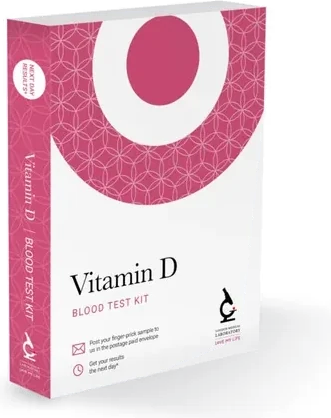
What it is for
- Vitamin D
Why people check it
Vitamin D comes from food and supplements, and is also made in the skin when it is exposed to sunlight. In the UK, up to a quarter of people are low in vitamin D by the end of winter. Low vitamin D can weaken bones and muscles, raise the risk of fractures and affect the immune system.
Can be done with a finger-prick kit at home, at a collection point or with home collection on request.
 Vitamin D
Who it is for
Anyone living in the UK, especially at the end of winter, and people with a condition that affects how fat is absorbed, such as Crohn's disease.
- Signs
People often check it when they notice
- Tiredness
- Bone or muscle aches
- Low mood
- Getting ill more often

How to give your sample
The app shows which ways are open for this test before you pay.
A kit at home
A kit arrives by Royal Mail. You collect the sample and post it back the same day, Monday to Thursday, in the prepaid envelope that comes with the kit, at a Royal Mail priority postbox. Collection instructions come with the kit.
A collection point
A blood sample taken at a collection point near you, found from your postcode in the app.
Home collection: on request
You ask in your account, and the team replies with a price and a date. Nothing is charged now.
The result arrives in the app.
It is yours: keep it, or send it to the doctor of your choice: only a doctor can say what it means for you. This page explains what the test is for; it does not replace a consultation.
Create your accountRead more
- Blood tests for athletes: iron, vitamin D, recovery and energy
- Why repeating blood tests over time tells you more than one result
- Women's health blood tests: iron, thyroid, vitamins, menopause and pregnancy
- Blood tests from 60: kidneys, B12, vitamin D and the heart
- Blood tests from 40: the NHS Health Check and what people add
- Blood tests in your 20s and 30s: your first numbers